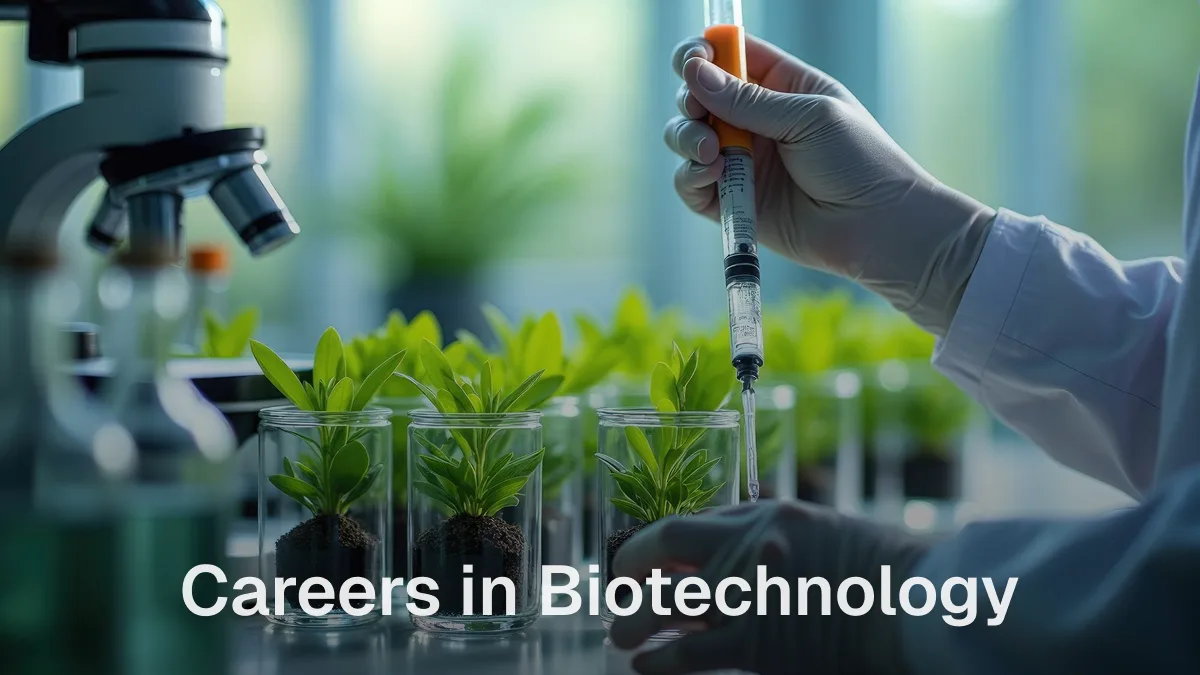
Many people think that Biotechnology is only about laboratory research. But that is not true. Biotechnology careers also span medicine manufacturing, clinical research, agriculture, data analysis and science communication.
A growing industry does not mean every graduate automatically gets a job. Understanding the available pathways in the field and the qualifications and skills behind them can help you make a better decision before choosing a Biotech degree.
This guide helps you understand Biotechnology career options and jobs based on your degree.
Top Biotechnology Career Options in India
There are seven broad Biotechnology career options, each requiring a different combination of interests and expertise. These career options include the following:
1. Research and Academia: Professionals in these fields work towards research fellowships, project roles, scientist positions or teaching through advanced study and research experience.
2. Biopharma and Manufacturing: Professionals with a biotech degree in this field explore production, quality control, quality assurance and fermentation-related roles. This work often involves processes, documentation and manufacturing standards rather than discovery research.
3. Clinical Research and Regulatory Affairs: Job roles in this career include clinical research associate, pharmacovigilance associate and regulatory affairs executive, with responsibilities spanning trials, drug safety and compliance.
4. Bioinformatics and Computational Biology: These job roles combine biology with programming to work on biological datasets, genomics and computational analysis.
5. Agriculture, Food, Industrial and Environmental Biotechnology: Opportunities in these fields include tissue culture, food safety, fermentation, biofertilisers and environmental testing.
6. Non-Laboratory Careers: Scientific writing, patents, technical sales, consulting and product management use biological knowledge alongside specialised professional skills.
7. Entrepreneurship: Founders with the knowledge of Biotechnology may build diagnostic tools, agricultural products, laboratory services or bioinformatics platforms. This route requires planning and is not an instant alternative to employment.

BSc Biotechnology Jobs vs MSc Biotechnology Jobs
Career opportunities in Biotechnology vary depending on educational qualifications, technical skills and specialisation. While undergraduate degrees generally provide access to entry-level positions, postgraduate qualifications can open pathways to research, advanced industrial roles and academia. The table below highlights the career options available at different qualification levels.
Qualification | Biotechnology Career Opportunities |
BSc Biotechnology | Laboratory trainee, quality-control trainee, sales roles and opportunities for higher studies. |
BTech Biotechnology | Manufacturing, production, quality assurance (QA) and quality control (QC) roles. |
MSc Biotechnology | Research and development (R&D), quality control, clinical research and bioinformatics roles. |
MTech / MS Biotechnology | Process development, industrial R&D and advanced technical roles. |
PhD in Biotechnology | Scientist positions, academic research, teaching and advanced R&D roles. |
Note: These are potential career pathways, not guaranteed placements. Employment opportunities depend on relevant skills, practical experience, specialisation and employer requirements.
Government Jobs and Higher Studies in Biotechnology
Government-related career opportunities in Biotechnology extend across research institutes, agriculture, regulatory testing and scientific services. However, research fellowships and permanent government employment are different outcomes.
Examinations such as CSIR-UGC NET, GATE BT/XL and DBT-BET support particular research or postgraduate routes.
For higher studies, students can also explore IIT JAM and CUET-PG to pursue higher education in Biotechnology. Always match the examination to the course or role you intend to pursue.
Skills Required for Biotechnology Jobs
Employers assess practical abilities, not just degree titles. Wet-lab skills include PCR, cell culture, ELISA and laboratory documentation. Computational pathways benefit from Python, R, Linux and data analysis.
Scientific writing, critical reading, communication and project management also matter. Internships, research projects and a demonstrable portfolio can strengthen applications, especially when campus recruitment is limited. Focus on becoming proficient in a smaller set of relevant skills rather than collecting certificates without experience.
Download the Complete Biotechnology Career Guide
Unsure which direction fits your interests? SciAstra's Biotechnology Career Guide explores seven pathways, degree-wise opportunities, indicative salary ranges, government-related routes, entrance exams, colleges and a year-by-year preparation plan.
Download Your Free Biotechnology Career Guide
Biotechnology Career Guide
Conclusion
The best career opportunities in Biotechnology depend on more than choosing a popular degree. Your qualifications, specialisation, practical experience and willingness to build relevant skills all shape your options. Compare the pathways carefully, investigate the work involved and plan your next academic or professional step with realistic expectations.