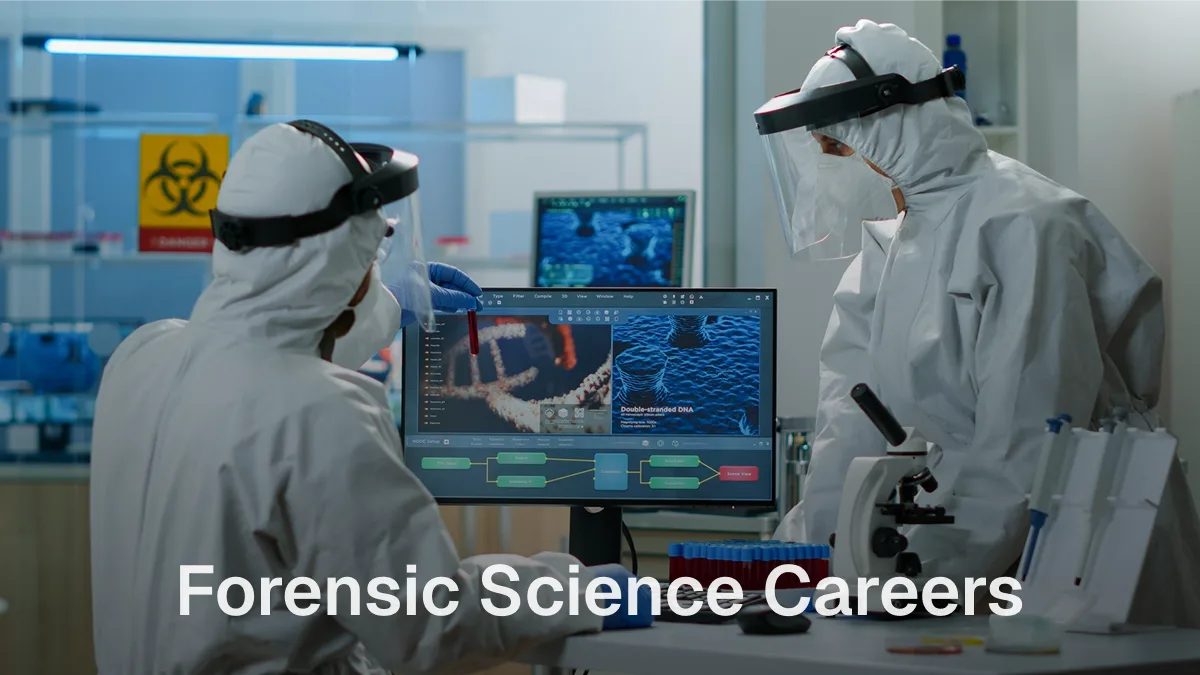
Forensic Science Careers: Forensic science combines scientific knowledge with forensic investigation to examine evidence and support criminal investigations and court proceedings. From DNA and toxicology to cyber forensics and questioned documents, the field offers several specialised career paths.
If you are wondering how to build a career in forensic science, understanding the right education, eligibility, specialisation and recruitment route is essential.
What Do Forensic Scientists Do?
A forensic scientist examines evidence and presents scientific findings in court. Major areas of specialisation include the following:
Forensic Biology & DNA: Blood, body fluids and DNA profiling
Forensic Chemistry & Toxicology: Poisons, drugs, narcotics and explosives
Physics & Ballistics: Firearms, glass, paint and tool marks
Questioned Documents: Handwriting, forgery and signatures
Fingerprints: Lifting and matching fingerprints using AFIS
Cyber/Digital Forensics: Phones, computers and data recovery
Forensic Psychology: Profiling, interviews and lie detection
Forensic Medicine: Autopsy and injury examination, requiring MBBS + MD
How to Build a Career in Forensic Science
The forensic science career pathway includes multiple stages from acquiring education to gaining practical experience through a job. The stages are as follows:
Forensic Science Career Route | |
Stage | Route |
Higher Secondary Education (Class 11–12) | Science stream: PCB or PCM |
Undergraduate Studies | BSc Forensic Science or a core science such as Chemistry, Zoology, Physics or Botany |
Postgraduate Studies | MSc Forensic Science with a specialisation |
Experience/PhD | 2–3 years of laboratory/research experience for several Junior Scientific Officer (JSO) and Scientist-B roles |
Job | Central Forensic Science Laboratory (CFSL), State Forensic Science Laboratory (State FSL), police laboratories or private organisations |
Forensic Science Eligibility & Entrance Exams
For undergraduate forensic programmes, students generally need 10+2 Science with PCB or PCM. They can also appear for CUET UG for admission to BSc/integrated forensic programmes.
Other routes include JEE Main for cyber security, NEET UG/PG for forensic medicine, and CLAT or CAT for forensic law and accounting.
For postgraduate study, students can appear for CUET PG for admission to MSc Forensic Science, while UGC NET can support JRF and teaching opportunities.
Forensic Science Career Options
The field offers opportunities across government and private organisations.
Government opportunities include:
Central and State Forensic Science Laboratories
Mobile forensic units and police laboratories
Fingerprint bureaus and cyber cells
CFSL, NIA and NCB-related roles
Government Examiner of Questioned Documents
Universities and research
Private-sector opportunities include:
Cyber forensics and incident response
Forensic audit and fraud investigation
DNA and paternity testing laboratories
Banking and insurance fraud investigation
Law firms and private detective agencies
Pharma, food quality and toxicology laboratories
Forensic Science Salary & Government Jobs
Government forensic science jobs follow the pay levels prescribed under the 7th CPC. In India, salaries for forensic science jobs in the government sector range from ₹29,200 for a Junior Scientific Assistant (Level 5) to ₹56,100 for a Scientist-B (Level 10), before applicable allowances.
The career scope in forensic science is strongest for candidates who combine a relevant Master’s degree with specialised knowledge and practical experience. Recruitment may take place through UPSC, State PSCs, DSSSB, and other government recruitment notifications.
Ready to Plan Your Forensic Science Career?
Get the complete Forensic Scientist: The Right Route as a PDF. This will help you explore forensic science colleges, eligibility, entrance exams, specialisations, placements, career options, government job rules, and salary details.
Download the Complete Forensic Science Career Guide. 👇
Forensic Science Career Guide
Conclusion
Building a successful career in forensic science requires patience and careful planning. The process includes choosing PCB or PCM, developing a strong foundation in core sciences, pursuing a relevant Master’s degree, gaining laboratory or research experience, and specialising in an area such as forensic biology, forensic chemistry, questioned documents, or cyber forensics. For aspirants seeking forensic science career opportunities and government jobs, the right combination of academic qualifications, specialisation, and practical experience can pave the way for a career as a Scientific Officer.