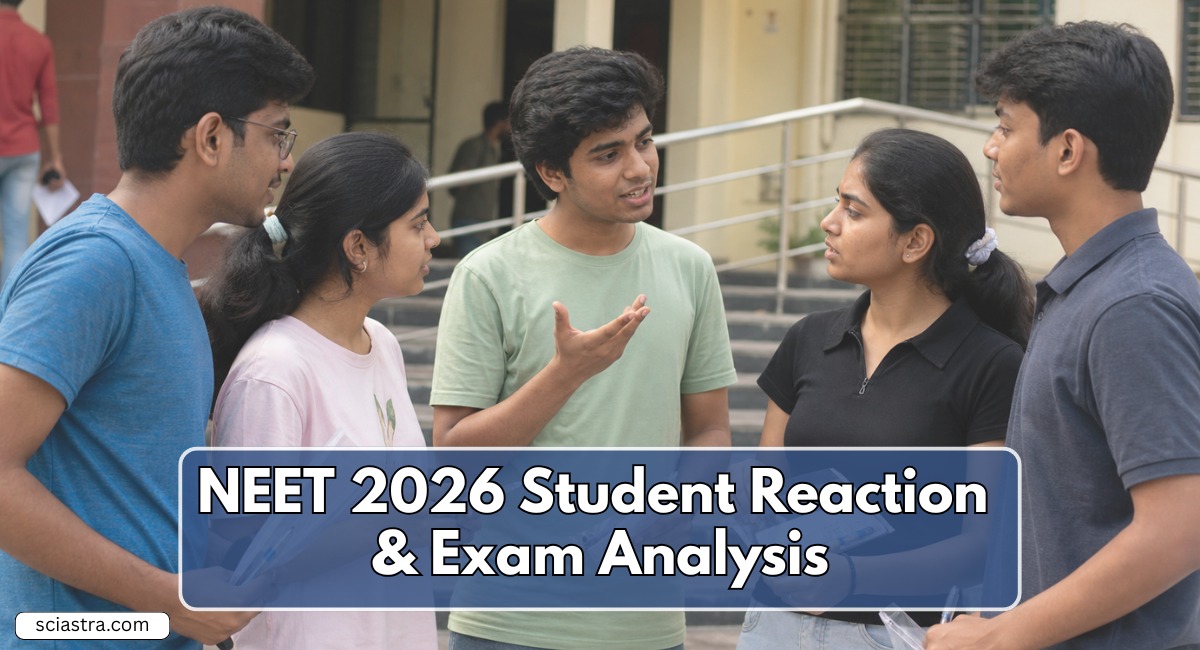
The National Eligibility cum Entrance Test (NEET UG) 2026 was successfully conducted on May 3, 2026, across thousands of centres in India. With over 23 lakh aspirants appearing for the highly competitive medical entrance exam, the first reactions from students and experts have now started pouring in. Initial analysis suggests that the paper was moderate in difficulty, with a clear variation in section-wise complexity.
NEET 2026 Overall Difficulty Level: Moderate but Lengthy
Based on student feedback and expert reviews, the NEET 2026 question paper was largely described as balanced and moderate, though slightly easier than the previous year. However, many candidates highlighted that the paper was lengthy and time-consuming, especially due to calculation-heavy and concept-based questions.
While some students found the exam manageable, others felt that the time constraint made it challenging to attempt all questions accurately. Reports indicate that the exam maintained a good mix of conceptual and NCERT-based questions, ensuring fairness across all sections.
NEET 2026 Student Reactions
Student reactions after exiting exam centres reveal a mixed yet slightly positive sentiment. A majority of aspirants agreed that the paper was not extremely difficult but required strong conceptual clarity and time management skills.
According to early reactions:
Many students termed the paper “moderate and doable”
Some described it as “easier than NEET 2025”
Others pointed out that tricky questions in Physics increased difficulty
A news report also highlighted that candidates had varied opinions, with some calling the exam easy while others considered it moderately challenging.
Overall, the consensus remains that NEET 2026 was competitive but not unpredictable, making cutoff trends crucial this year.
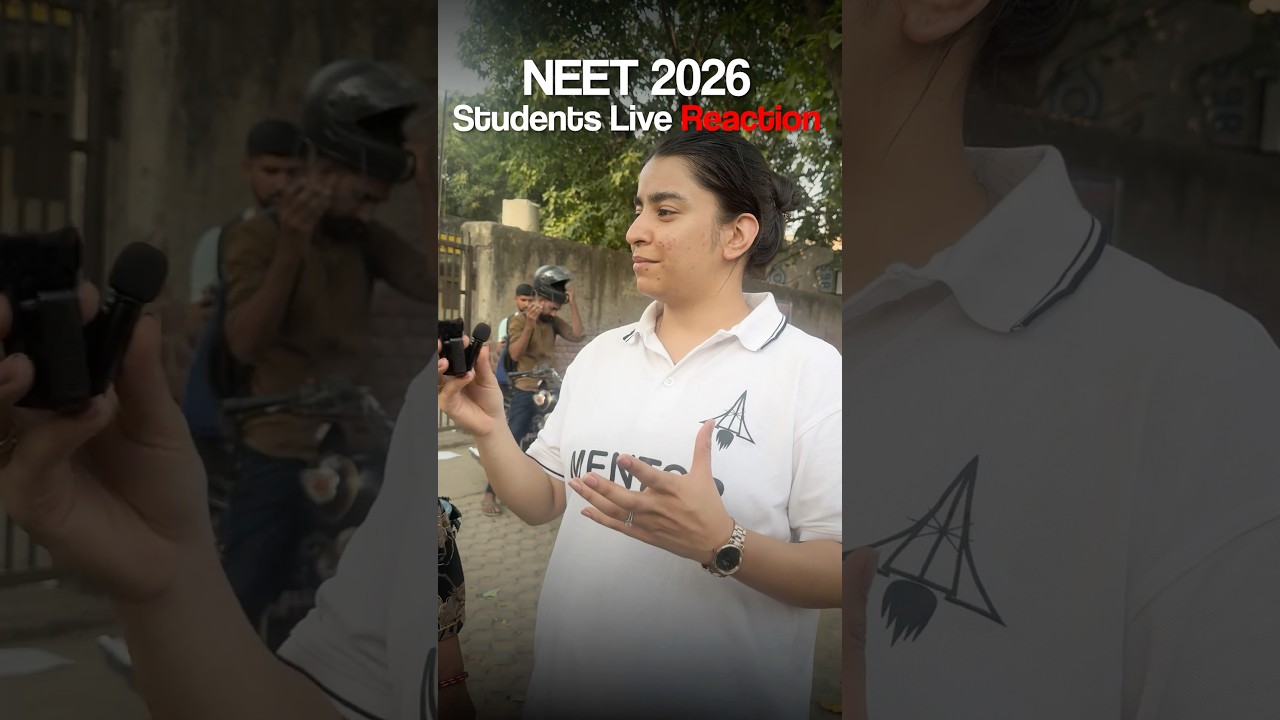
Candidates can check out the NEET 2026 Student Reaction Video from below:
IAT/NEST 2026 Crash Course
If you’re serious about securing admission into top institutes like IISc, IISERs, and NISER, then relying only on self-study or random resources may not be enough. What you truly need is a structured plan, expert mentorship, and consistent practice—all in one place.
That’s exactly what the SciAstra IAT/NEST 2026 Personalized Crash Course (Hinglish Batch) is designed for.
✔ Daily live revision sessions to keep your concepts sharp
✔ Complete PCMB syllabus coverage with exam-focused teaching
✔ Previous Year Questions (2017–2025) with detailed solutions
✔ 24 full-length mock tests (IAT + NEST) with video explanations
✔ Personalized study roadmap tailored to your strengths & weaknesses
✔ Dedicated mentor from top institutes like IISc/IISER/NISER
✔ Bi-weekly strategy & accountability sessions to keep you on track
✔ Daily problem-solving sessions to boost speed and accuracy
✔ Access to recordings, notes, DPPs, and doubt-solving support

Section-wise Analysis
Physics: Tough and Time-Consuming
Physics emerged as the most challenging section in NEET 2026. Students reported that questions were lengthy, calculation-intensive, and concept-driven, requiring deeper understanding rather than direct formula application.
Many aspirants struggled with time management in this section, which impacted their ability to attempt the entire paper confidently.
Chemistry: Moderate and Balanced
The Chemistry section was widely considered moderate and scoring. Questions were largely NCERT-based, with a balanced mix of Physical, Organic, and Inorganic Chemistry.
Students found this section manageable, and it is expected to play a key role in determining overall scores and rank differentiation.
Biology: Easy but Lengthy
Biology was the easiest section according to most candidates, with many questions directly based on NCERT concepts. However, the section was lengthy, which added pressure on time management.
Experts suggest that high scores in Biology will significantly influence overall merit due to its scoring nature.
Conclusion
NEET 2026 maintained its reputation as a concept-driven and competitive examination. While the paper was not extremely difficult, the combination of lengthy questions and time pressure made it challenging for many candidates.
With Physics emerging as the toughest section and Biology being the most scoring, the overall performance of candidates will depend heavily on accuracy and time management. As answer keys and results are expected in the coming weeks, aspirants are now eagerly waiting to evaluate their scores and predict their chances for MBBS and BDS admissions.


