
You love biology, but does that mean you have to become a doctor?
For many students completing Class 12, medicine seems like the obvious career choice. But what if you are equally interested in scientific discoveries, biotechnology or developing new treatments?
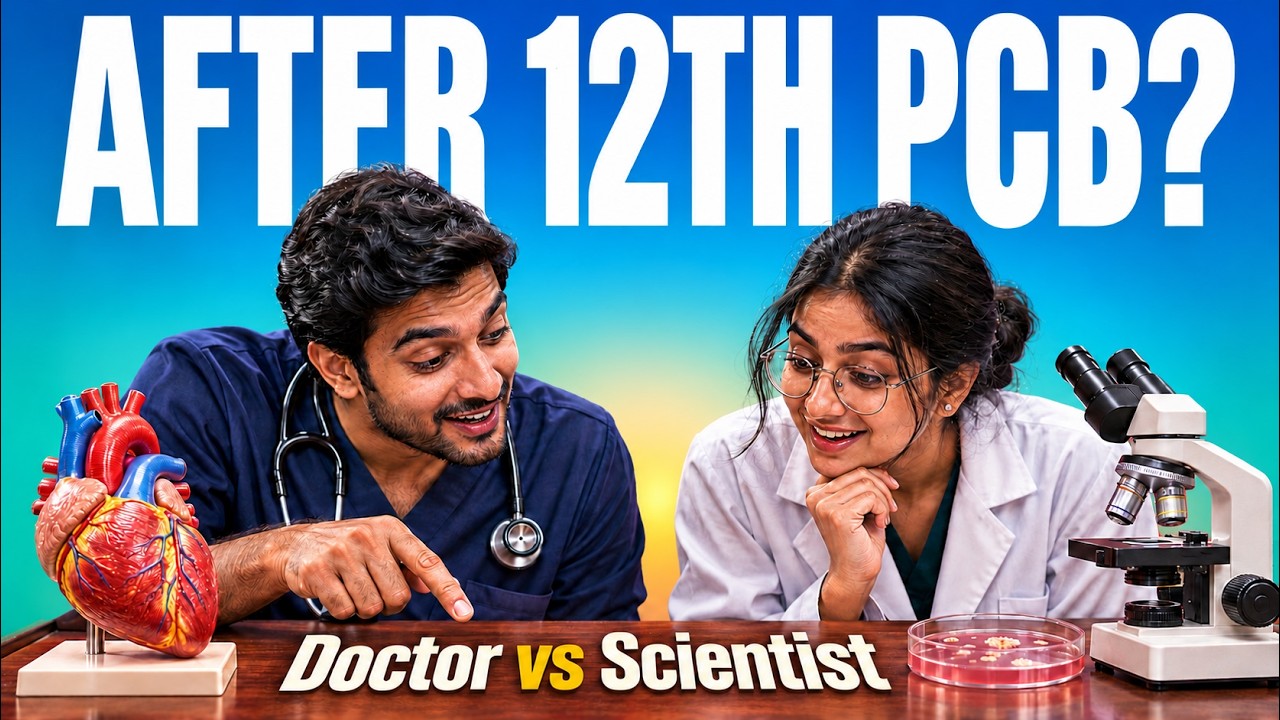
The Doctor vs Scientist debate goes beyond salary and job titles. Both careers offer opportunities to contribute to society, but their education timelines, earning potential, career flexibility and daily responsibilities differ.
Understanding these differences can help you choose a career that aligns with your interests and long-term goals. This SciAstra career guide will help you determine whether becoming a doctor or a scientist is the better career choice for you.
Doctor vs Scientist: Understanding the Career Difference
The fundamental difference between the roles of a doctor and a scientist lies in how they contribute to healthcare and science.
Doctors apply medical knowledge to diagnose illnesses, treat patients and provide clinical care. Their work primarily involves direct patient interaction and medical decision-making.
Scientists investigate unanswered questions, generate knowledge and develop new solutions. They can work in research, biotechnology, pharmaceutical industries, computational science and innovation.
While doctors directly improve patients' lives, scientific discoveries can benefit large populations through new technologies and treatments.
Medical Career vs Research Career: Education and Training
Both medical and research professions require significant education, but their academic journeys differ. The pathways to these professions are as follows:
Doctor pathway:
MBBS education
Postgraduate training and specialisation
Clinical practice and professional advancement
Scientist pathway:
BS/BSc undergraduate education
MSc, PhD or other relevant research training
Careers in research institutions or industry
Students exploring how to become a scientist in India should consider the qualifications required for their preferred research or industry role.
Doctor vs Scientist Salary in India
Who earns more: a doctor or a scientist?
There is no universal winner.
Medical education can involve substantial tuition fees, particularly in private colleges. Postgraduate specialisation also requires additional time, while establishing a private practice may involve further expenses.
Scientists may access funded research programmes and fellowships, potentially reducing educational expenses.
During advanced training, medical interns or residents may receive stipends, while eligible research scholars may receive fellowships.
Long-term earnings depend on several factors:
Doctors: Clinical experience, specialisation, senior positions and private practice.
Scientists: Technical expertise, industry experience, research leadership and computational skills.
Career Options After 12th Science: Medicine vs Research
Career opportunities extend beyond traditional clinical practice and laboratory research.
Medical Career Options After 12th
Medical pathways can eventually lead to:
Clinical practice and specialisation
Medical education
Clinical research
Public health and administration
Scientist Career in India
Students pursuing a research career after 12th can explore several directions:
Biotechnology and pharmaceutical research
Bioinformatics and computational biology
Drug development and clinical research
Healthcare analytics and scientific consulting
Research institutions and academia
Scientific entrepreneurship
These career options beyond NEET demonstrate that studying biology does not necessarily mean working in a hospital or remaining in academic research.
Scientific knowledge can also support careers involving technology, data and industry.
Doctor vs Scientist: Education and Career Timeline
The educational journey and career progression differ for doctors and scientists. While doctors typically follow a structured medical education and specialisation pathway, scientists can pursue undergraduate studies, advanced research degrees, and careers in research or industry. The table below compares their illustrative career timelines over the first 15 years.
Career Stage | Doctor | Scientist |
Undergraduate Education | Years 1–5.5: MBBS | Years 1–3/4: BS/BSc |
Advanced Education and Training | Years 6–8.5: Postgraduate (PG) training | Years 4–8/10: MSc/PhD |
Professional Career | Years 9–15: Clinical career | Later years: Research or industry career |
Note: These timelines are approximate and may vary depending on individual career paths, qualifications and specialisations. Some scientists may begin working earlier, while others may pursue further education or research.
Download the Free Doctor vs Scientist Career Guide
Still confused about which career suits you?
Explore SciAstra's complete Doctor vs Scientist Career Comparison PDF, featuring detailed educational timelines, financial comparisons, earning opportunities, career flexibility and work-life considerations.
Complete a short form with your name, email address and phone number to access the guide.
Download the FREE Doctor vs Scientist Career Guide 👇
Doctor Vs Scientist (Complete Career Guide)
Doctor Vs Scientist (Complete Career Guide)
Career Flexibility and Work-Life Balance
What happens if your interests change after graduation?
Doctors moving away from clinical practice may require additional training or a career transition. However, their medical qualifications remain valuable in healthcare-related roles.
Scientists can transfer research, analytical and technical skills into related fields, including biotechnology, pharmaceuticals and computational science.
Work-life balance also depends on the specific role.
Doctors may experience night shifts, on-call responsibilities and unpredictable clinical demands.
Scientists may face research deadlines, lengthy experiments and publication pressure. Some industry and research positions offer more predictable schedules.
Neither profession guarantees better work-life balance.
Doctor vs Scientist: Which Career Should You Choose?
Your interests should guide your decision.
Consider medicine if you:
Enjoy direct patient interaction.
Want to diagnose and treat illnesses.
Aspire to pursue clinical practice.
Consider science if you:
Enjoy investigating biological mechanisms.
Want to develop medicines or technologies.
Prefer combining biology with research, data or innovation.
Students interested in both fields can also explore clinical research and interdisciplinary opportunities.
Conclusion
The better career depends on your interests, education preferences, financial considerations and long-term ambitions.
Medicine focuses on addressing patients' current needs, while scientific research contributes to developing future solutions.
Both professions can create meaningful social impact. Rather than choosing based solely on salary expectations or social pressure, explore the opportunities each pathway offers before deciding.