



.webp)






The Common University Entrance Test (CUET) 2026 will be conducted from May 11 to 31, 2026 for admission to more than 240 universities in India, including central, state, deemed, and private institutions. The application form for the exam was released on January 3, 2026 on the official CUET website – cuet.nta.nic.in. The last date to fill out the application form is January 30, 2026.
While filling out the CUET 2026 application form, candidates must carefully select the correct subjects to avoid cancellation of their candidature. This is where CUET subject mapping becomes important. It involves choosing the right subject combinations in CUET that align with the eligibility criteria of the course you wish to pursue.
Delhi University (DU), one of the most sought-after institutions accepting CUET scores, offers a wide range of courses through this exam. If you are planning to appear for CUET 2026 for admission to DU, this article will guide you through CUET DU 2026 subject mapping, explaining its meaning and the course-wise subject selection process.
What is CUET Subject Mapping?
CUET subject mapping refers to aligning the subjects a candidate chooses in CUET with the subjects required by the university or course they wish to apply for. This ensures that they meet the admission eligibility criteria.
The subject mapping process must be completed while filling out the CUET application form. Therefore, candidates should carefully consider the CUET 2026 subject mapping criteria at the time of filling out their CUET 2026 application form.
Importance of Subject Mapping in CUET 2026
Subject mapping is a very important aspect of the CUET application process. Consider the following points to understand its significance:
Admission eligibility depends on it
Every university has specific subject requirements for candidates based on their Class XI and XII courses. If candidates do not have the required subjects in Class XI and XII, they will not be considered eligible for admission.
Wrong subject choices can lead to rejection
If students choose CUET subjects that are not included in the eligibility criteria of the course they want to pursue, their application will be rejected, regardless of their CUET score.
Ensures fairness in selection
Subject mapping ensures that all candidates are evaluated based on the same criteria for admission to a particular course. This helps maintain transparency and fairness in the selection process.
Also Read:
CUET 2026 Language and Domain Subjects
To understand the CUET subject mapping, candidates first need to understand the types of subjects to be chosen for CUET 2026. They are 1. Language Subjects and 2. Domain Subjects.
CUET 2026 Language Subjects
There will be a total of 13 language subjects in the CUET 2026. Candidates can choose any of the listed language subjects. Check out the list below:
List A: CUET 2026 Language Subjects | |
Subject Code | Subject |
101 | English |
102 | Hindi |
103 | Assamese |
104 | Bengali |
105 | Gujarati |
106 | Kannada |
107 | Malayalam |
108 | Marathi |
109 | Odia |
110 | Punjabi |
111 | Tamil |
112 | Telugu |
113 | Urdu |
CUET 2026 Domain Subjects
Domain subjects for CUET refer to the core academic subjects related to the course a candidate wants to pursue in undergraduate studies through the CUET exam. Check out the list of the domain subjects as follows:
List B: CUET 2026 Domain Subjects | |
Subject Code | Subject |
301 | Accountancy / Bookkeeping |
302 | Agriculture |
303 | Anthropology |
304 | Biology / Biological Science / Biotechnology / Biochemistry |
305 | Business Studies |
306 | Chemistry |
307 | Environmental Science |
308 | Computer Science / Information Practices |
309 | Economics / Business Economics |
312 | Fine Arts / Visual Arts / Commercial Arts |
313 | Geography / Geology |
314 | History |
315 | Home Science |
316 | Knowledge Tradition – Practices in India |
318 | Mass Media / Mass Communication |
319 | Mathematics / Applied Mathematics |
320 | Performing Arts (Dance, Drama, Music) |
321 | Physical Education (Yoga, Sports) |
322 | Physics |
323 | Political Science |
324 | Psychology |
325 | Sanskrit |
326 | Sociology |
501 | General Aptitude Test: For all the remaining languages, including foreign languages such as Arabic, Bodo, Chinese, Dogri, French, German, Italian, Japanese, Kashmiri, Konkani, Maithili, Manipuri, Nepali, Persian, Russian, Santhali, Sindhi, Spanish, Tibetan, and Sanskrit) |
Also Read:
CUET 2026 DU Subject Mapping
Delhi University offers a total of 73 courses through CUET. Candidates can refer to the following table to understand the subject mapping for some of the most popular DU courses:
S. No. | Course | CUET Subject Mapping |
1 | BA (Hons.) English | Combination 1: English from List A + Any three subjects from list B OR Combination 2: English and one language from List A + Any two subjects from List B |
2 | BA (Hons.) Hindi | Combination 1: Hindi from List A + Any three subjects from List B OR Combination 2: Hindi and one language from List A + Any two subjects from List B |
3 | BA (Hons.) Applied Psychology | Combination 1: Any one Language from List A + Any three subjects from List B OR Combination 2: Any two Languages from List A + Any two subjects from List B |
4 | BA (Hons.) Economics | Combination 1: Any one Language from List A + Mathematics/Applied Mathematics + Any two subjects from List B |
5 | BA (Hons.) History | Combination 1: Any one Language from List A + Any three subjects from List B OR Combination 2: Any two Languages from List A + Any two subjects from List B |
6 | BA (Hons.) Geography | Combination 1: Any one Language from List A + Any three subjects from List B OR Combination 2: Any two Languages from List A + Any two subjects from List B |
7 | BSc (Hons.) Biomedical Science | Combination 1: Physics + Chemistry + Biology/ Biological Studies/ Biotechnology/ Biochemistry |
8 | BSc (Hons.) Bio-Chemistry | Combination 1: Chemistry + Biology/ Biological Studies/ Biotechnology/ Biochemistry + Physics OR Combination 2: Chemistry + Biology/Biological Studies/ Biotechnology/ Biochemistry + Mathematics/Applied Mathematics |
9 | BSc (Hons.) Botany | Combination 1: Physics + Chemistry + Biology/Biological Studies/ Biotechnology/Biochemistry |
10 | BSc (Hons.) Chemistry | Combination 1: Physics + Chemistry + Mathematics/Applied Mathematics |
11 | BSc (Hons.) Computer Science | Combination 1: Any one Language from List A + Mathematics/ Applied Mathematics + Any two subjects from List B OR Combination 2: Any two Languages from List A + Mathematics/ Applied Mathematics + Any one subject from List B |
12 | BSc (Hons.) Mathematics | Combination 1: Any one Language from List A + Mathematics/Applied Mathematics + Any two subjects from List B OR Combination 2: Any two Languages from List A + Mathematics/ Applied Mathematics + Any one subject from List B |
13 | BSc (Hons.) Physics | Combination: Physics + Chemistry + Mathematics/Applied Mathematics |
14 | BSc (Hons.) Microbiology | Combination 1: Physics + Chemistry + Biology/Biological Studies/Biotechnology/Biochemistry |
15 | BCom (Hons.) Hindi | Combination 1: Any one Language from List A + Mathematics/Applied Mathematics + Any two subjects from List B OR Combination 2: Any one Language from List A + Accountancy/Bookkeeping + Any two subjects from List B |
16 | BA (Hons.) Urdu | Combination I: Urdu from List A + Any two subjects from List B1 + Any one subject from either List B1 or List B2 OR Combination 2: Any one language from List A + Any two subjects from List B1 + Any one subject from either List B1 or List B2 |
17 | BA (Hons.) Italian | Combination 1: Italian from List A + Any two subjects from List B1 + Any one subject from either List B1 or List B2 OR Combination 2: Any one Language from List A + Any two subjects from List B1 + Any one subject from either List B1 |
CUET 2026 Books
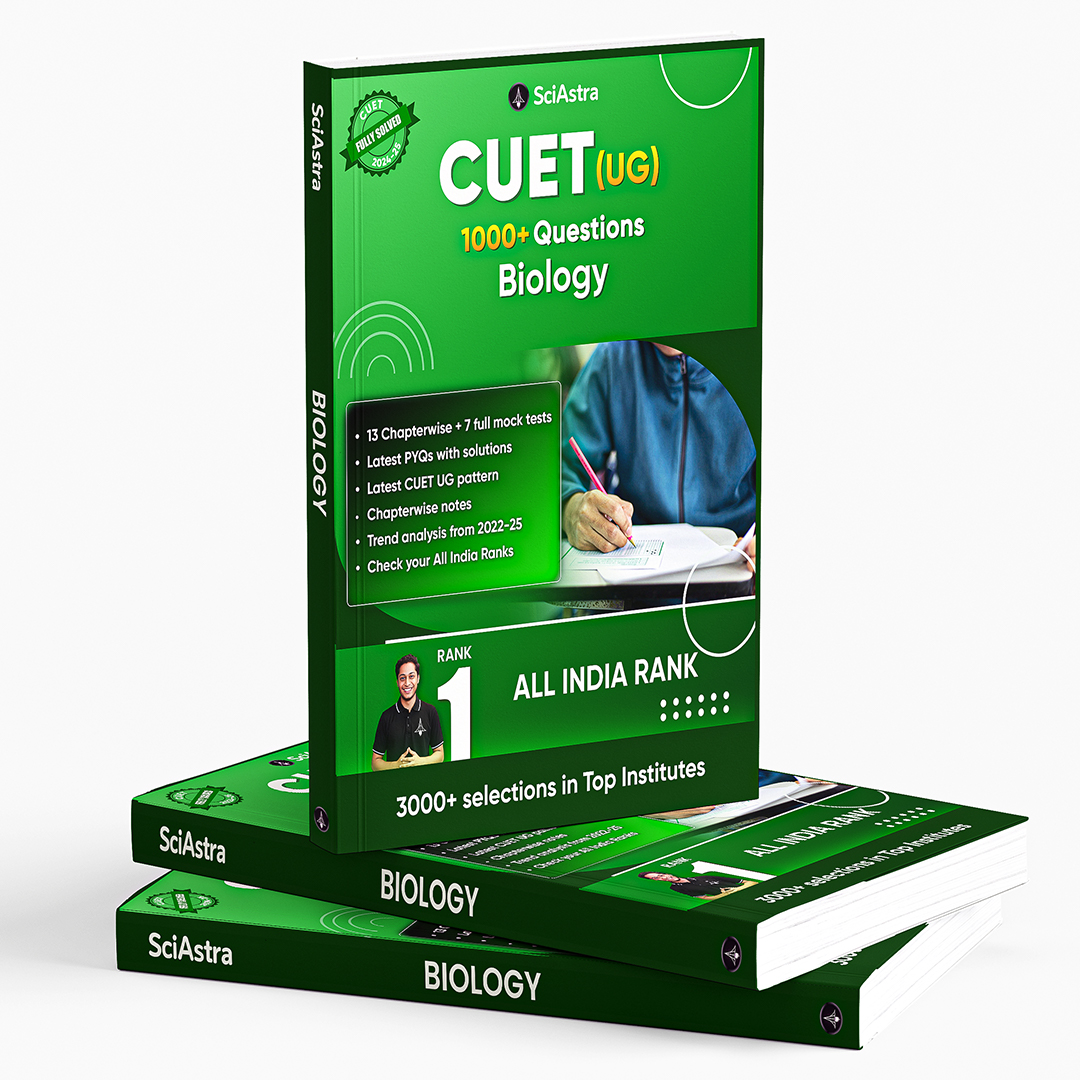
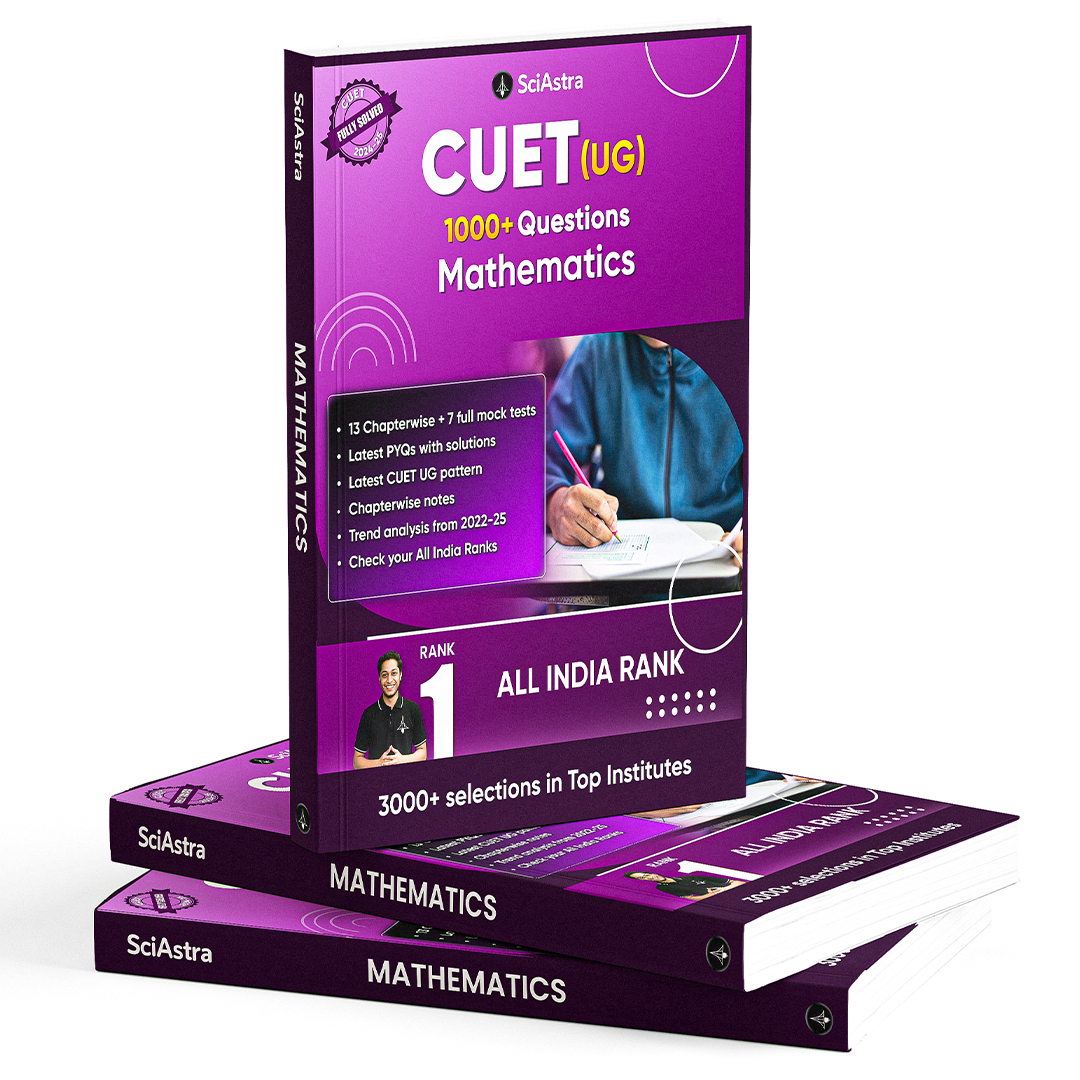
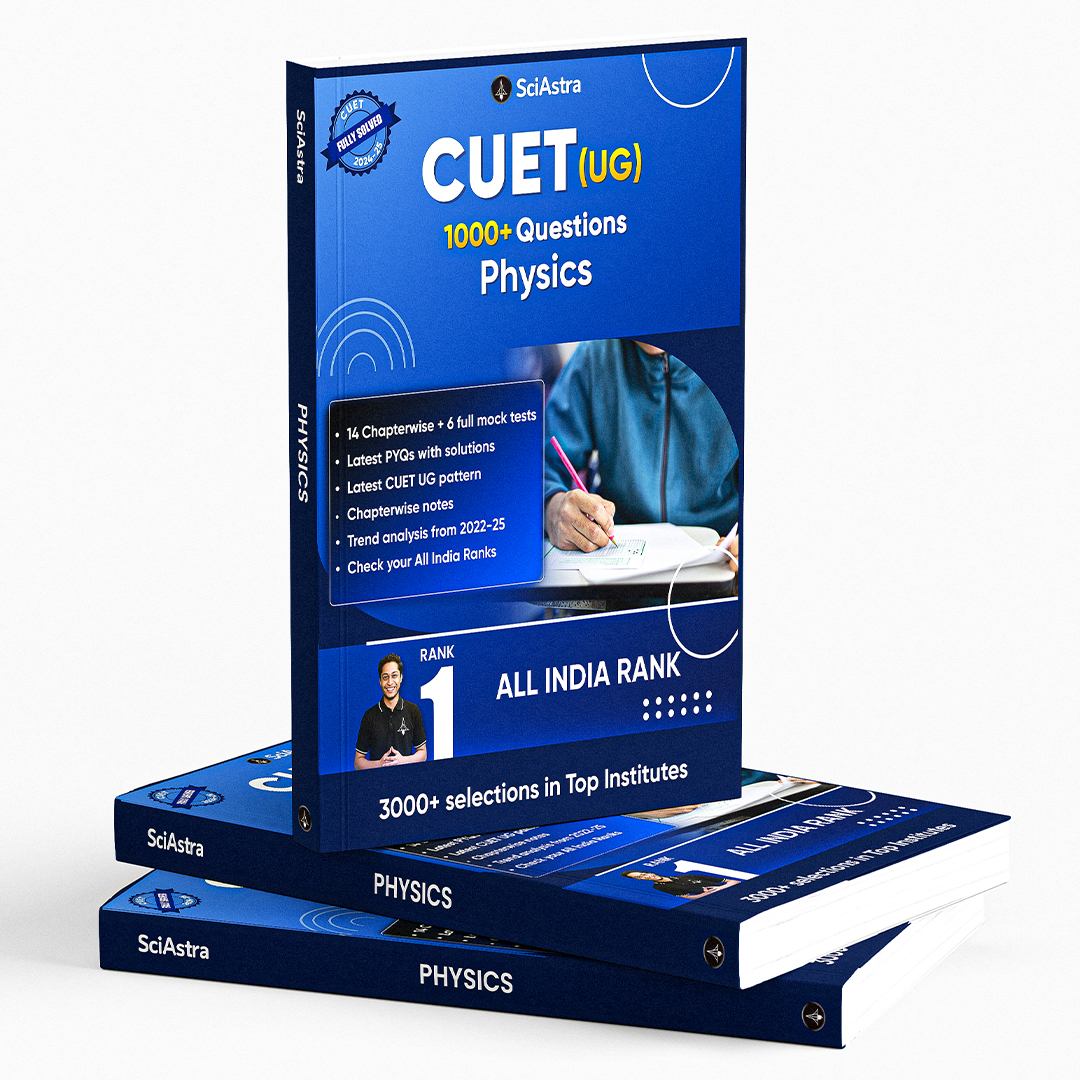
To further boost exam readiness, SciAstra provides full-length subject-wise mock tests, enabling students to experience the real CUET exam pattern and build accuracy, speed, and confidence.
Check out these CUET Preparation Books here:
Book Subject | Link to Purchas | Amazon/Flipkart Link |
| CUET Biology 2026 Mock Test Series- | |
| CUET Chemistry 2026 Mock Test Series- | |
| CUET Mathematics 2026 Mock Test Series- Buy Now | |
| CUET Physics 2026 Mock Test Series- |

Conclusion
Subject mapping in CUET 2026 is an important step that has a direct impact on admission eligibility. Opting for proper subject combinations ensures fairness, avoids rejection, and complies with the needs of universities. The candidates should go through course-wise requirements carefully while filling the application form to gain admission in their desired programme.
Read More: