.webp)
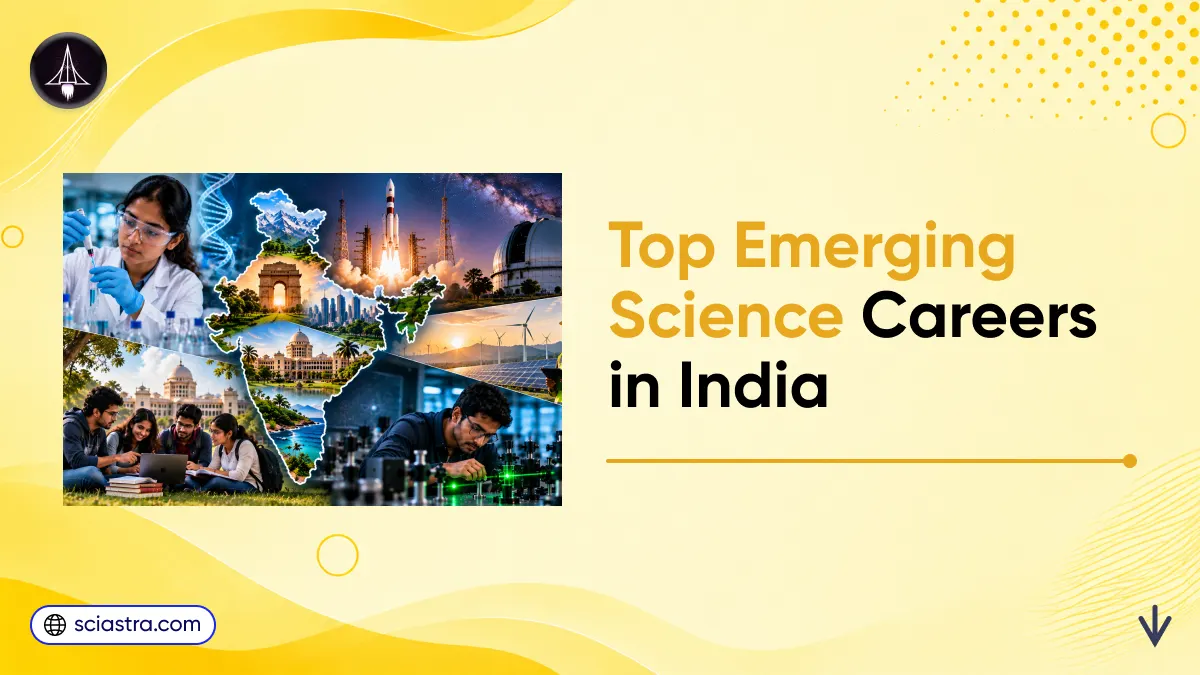
Top emerging science careers in India are changing the way students think about their future. Gone are the days when choosing science meant limiting your career options to medicine or engineering. With fast-paced developments in science, research, and technology, students today have access to a wide range of exciting career opportunities that are shaping industries and addressing some of the world's biggest challenges.
From artificial intelligence and biotechnology to space science, renewable energy, quantum technology, and other emerging fields, science is opening doors to careers that were once difficult to imagine. These new-age fields combine scientific knowledge with innovation, technology, and problem-solving, making them exciting options for students who want to explore beyond traditional career paths.
If you are a Class 11 or 12 student exploring different options for higher education but finding it difficult to decide which path is right for you, understanding these emerging fields can help you make better academic and career choices. This SciAstra blog explores some of the most promising science careers, including their scope, courses, entrance exams, and career opportunities, to help you find a field that matches your interests and goals.
Top emerging science careers in India
Careers in science are no longer limited to becoming a doctor or an engineer, especially in India. Technology, healthcare, space research, artificial intelligence, biotechnology, and environmental science are constantly evolving. As a result, several new career prospects are emerging from these advancements. Along with great growth and lucrative salaries, these fields enable students to address real-world issues through innovation and research.
If you have a love for science and are wondering about your future, here are some of the best upcoming science careers in India that you should consider.
Data Science and Artificial Intelligence
Data Science and Artificial Intelligence (AI) involve collecting, analysing, and interpreting large volumes of data to solve complex problems and build intelligent systems. Professionals in these fields are transforming industries such as healthcare, finance, manufacturing, education, and e-commerce by improving decision-making and automating processes. With the expansion of India's digital economy, professionals with expertise in AI, machine learning, and data analytics are in high demand across both research and industry.
Here are the recommended courses in data science and artificial intelligence, along with their eligibility criteria and key entrance exams, to help you make informed decisions about your academic journey.
Artificial Intelligence and Data Science: Courses, Eligibility & Entrance Exams | ||
Recommended Course | Eligibility | Major Entrance Exams |
BSc/BS in Data Science, Artificial Intelligence, Computer Science, Statistics or Mathematics; BTech in AI & Data Science/Computer Science | Class 12 with PCM (Physics, Chemistry, and Mathematics) from a recognised board. Some universities also accept students through CUET-based admissions. | JEE Main, JEE Advanced (for IITs), CUET UG, IAT (for BS programmes at IISERs and BS at IISc), institute-specific entrance exams |
Note: Candidates must check the eligibility criteria before applying for the Artificial Intelligence and Data Science courses mentioned above or appearing for the entrance exams.
Also read: How to Become Data Scientist in India
Bioinformatics and Computational Biology
Bioinformatics and computational biology are interdisciplinary fields that combine biology, computer science, and data analysis to study biological systems using computational tools. Researchers in these fields analyse DNA sequences, understand diseases, and contribute to the development of personalised medicine in modern healthcare and genomics. With the rise of genetic research and large-scale biological data, bioinformatics is becoming increasingly important in both research institutions and biotech industries.
Check out some of the top courses in bioinformatics and computational biology, along with their eligibility criteria and entrance exams.
Bioinformatics and Computational Biology: Courses, Eligibility & Entrance Exams | ||
Recommended Course | Eligibility | Entrance Exams |
BSc Bioinformatics, BSc Computational Biology, BSc Biotechnology, BS/MS in Biological Sciences, BTech Biotechnology / Bioinformatics | Class 12 with PCB or PCM (depending on the university). A strong foundation in biology, mathematics, and basic programming is preferred. | CUET UG (central universities), IAT (IISERs/IISc BS-MS), NEET UG (some biotech/biomedical pathways), institute-specific entrance exams |
Note: Candidates must check the eligibility criteria before applying for the Bioinformatics and Computational Biology courses mentioned above or appearing for the entrance exams.
Biotechnology and Genetic Engineering
Biotechnology & Genetic Engineering focuses on using living organisms, biological systems, and genetic modification techniques to develop useful products and solutions.
This field plays a vital role in modern medicine, agriculture, and industrial applications. It is one of the fastest-growing science fields in India, with significant demand in both research and industry. Biotechnology has contributed to the development of life-saving medicines and vaccines, improved crop yields, and the development of disease-resistant crops. Modern biotechnology began to develop significantly in the 1970s.
Here’s how this field is helping reshape the world around us:
It is used in creating vaccines, antibiotics, and modern therapies for diseases.
It improves crop productivity, pest resistance, and food security through genetic techniques.
There is high demand for professionals in biotech, government institutions, and global research organisations.
It increases the potential for diagnostics and gene therapy, as well as personalised medicine development.
Biotechnology and Genetic Engineering: Courses, Eligibility & Entrance Exams | ||
Recommended Course | Eligibility | Entrance Exams |
BSc Biotechnology, BTech Biotechnology / Genetic Engineering, BS-MS in Biological Sciences, BSc Genetics / Microbiology / Life Sciences | Class 12 with PCB (Physics, Chemistry, Biology). Some institutes may also accept PCM with biology as an additional subject. A strong interest in biology and lab work is essential. | CUET UG (central universities), NEET UG (some allied biotech/medical pathways), IAT (IISERs/IISc BS-MS programmes), and institute-specific entrance exams |
Note: Candidates must check the eligibility criteria before applying for the Biotechnology & Genetic Engineering courses mentioned above or appearing for the entrance exams.
Also read: Best Biology Courses After Class 12th
Environmental Science and Sustainability
In view of the growing focus on sustainability and environmentally friendly practices, this field has become highly important for industries, governments, and organisations. It brings together science, policies, and technology to develop sustainable solutions for environmental challenges. The following points will help you understand its importance:
It is responsible for developing strategies to minimise carbon emissions and replace fossil fuels with renewable energy.
It helps industries comply with environmental laws and adopt greener practices.
It offers opportunities in water management, waste-to-energy, and sustainable development planning.
There is a rising demand for professionals in green policy, ESG, and environmental planning.
Environmental Science and Sustainability: Courses, Eligibility & Entrance Exams | ||
Recommended Course | Eligibility | Entrance Exams |
BSc Environmental Science, BS Environmental Studies, BSc Ecology, BSc Earth Sciences, Integrated BS-MS programmes | Class 12 with PCM or PCB (varies by university). A basic understanding of science and an interest in environmental studies are preferred. | CUET UG (central universities), IAT (IISERs/IISc BS-MS programmes), state university entrance exams, institute-specific exams |
Note: Candidates must check the eligibility criteria before applying for the Environmental Science and Sustainability courses mentioned above or appearing for the entrance exams.
Renewable Energy and Clean Technology
Renewable energy and clean technology involve creating sustainable energy-production systems that help reduce dependency on fossil fuels and minimise the impact on the ecosystem. India's growing focus on solar- and wind-energy-based green energy initiatives has encouraged research and development in this field due to growing concerns about climate change.
This field combines physics, engineering, and environmental science to make energy systems cleaner and more efficient for the future.
This field includes:
Design optimisation of residential, industrial, and utility-scale solar power systems
Capturing wind energy through turbines and developing renewable electrical grids
Designing technologies that are sustainable, energy-efficient, and carbon-reducing in nature
Supporting global needs such as the clean energy transition and reduction of climate impacts
Renewable Energy and Clean Technology: Courses, Eligibility & Entrance Exams | ||
Recommended Course | Eligibility | Entrance Exams |
BSc Physics / Environmental Science / Energy Studies; BTech in Renewable Energy Engineering, Electrical Engineering, Mechanical Engineering | Class 12 with PCM (Physics, Chemistry, and Mathematics). A strong foundation in physics and mathematics is important for engineering pathways. | JEE Main (NITs, IIITs, engineering colleges), JEE Advanced (IITs), CUET UG (central universities), institute-specific entrance exams |
Note: Candidates must check the eligibility criteria before applying for the Renewable Energy and Clean Technology courses mentioned above or appearing for the entrance exams.
Healthcare Technology and Digital Health
Healthcare technology and digital health focus on applying science, medicine, and technology to improve healthcare systems, patient care, and medical decision-making. With the advancement of digital tools, IT-enabled diagnostics, and telehealth services, this field is changing the way healthcare services are accessed and delivered. These technologies can make healthcare more time-efficient, accessible, and data-driven.
Here are some key areas of development:
Enables remote diagnosis and consultation through digital platforms, improving access to healthcare
Uses data systems and analytics to manage patient records, hospital systems, and medical research
Involves the development of diagnostic devices, AI-based tools, and advanced healthcare equipment
Increasing demand for tech-driven healthcare solutions in hospitals and startups
Healthcare Technology and Digital Health: Courses, Eligibility & Entrance Exams | ||
Recommended Course | Eligibility | Entrance Exams |
BSc/BTech in Biomedical Engineering, Health Informatics, Biotechnology, Medical Technology, and Life Sciences | Class 12 with PCB or PCM (varies by course and university). Biology is preferred for biomedical routes, while PCM is accepted for tech-based healthcare programmes. | CUET UG, JEE Main (engineering/tech routes), NEET UG (medical/biomedical-linked pathways in some institutes), IAT (research-focused BS-MS programmes), and institute-specific exams |
Note: Candidates must check the eligibility criteria before applying for the Healthcare Technology and Digital Health courses mentioned above or appearing for the entrance exams.
Space Science and Astronomy
Space science and astronomy largely deal with the study of celestial bodies, space systems, satellites, and the universe beyond Earth. As Indian space missions, satellite technology, and interplanetary exploration continue to gain momentum, this field is growing rapidly. It combines physics, mathematics, engineering, and research to study space phenomena, as well as the use of advanced technologies in communication, navigation, and exploration.
To know more about this field, read the points mentioned below:
Development and operation of communication, weather, and navigation satellites
Participation in missions related to rockets, spacecraft, and interplanetary studies
Increasing opportunities through organisations like ISRO and private space startups
Space Science and Astronomy : Courses, Eligibility & Entrance Exams | ||
Recommended Course | Eligibility | Entrance Exams |
BSc Physics / Astronomy / Astrophysics, BS-MS in Physical Sciences, BTech Aerospace Engineering, BTech Avionics / Space Technology | Class 12 with PCM (Physics, Chemistry, and Mathematics). A strong foundation in physics and mathematics is essential for space and engineering pathways. | JEE Main (NITs, IIITs, engineering colleges), JEE Advanced (IITs), IAT (IISERs/IISc BS-MS programmes), CUET UG (central universities), institute-specific exams |
Note: Candidates must check the eligibility criteria before applying for the Space Science and Astronomy courses mentioned above or appearing for the entrance exams.
Robotics and Automation
We all played with miniature toys at some point in our childhood and wondered how they worked. Today, robotics and automation cover the design, construction, programming, and operation of robots. This field has witnessed rapid growth as industries increasingly rely on AI, machine learning, and smart manufacturing systems.
Robotics is a key part of modern technological development and industrial evolution. It has evolved from manufacturing robotic arms in factories to data-driven industrial robots used in healthcare and supply chains.
Here are some key points to know more about this field:
Use of machines and control systems to improve manufacturing efficiency and reduce human effort
Integration of artificial intelligence with robotics for decision-making and adaptive behaviour
Use of robots in production lines, packaging, quality control, and logistics
High growth in smart factories, defence technology, and automation startups
Robotics and Automation: Courses, Eligibility & Entrance Exams | ||
Recommended Course | Eligibility | Entrance Exams |
BTech Robotics Engineering, BTech Mechanical / Electrical / Electronics Engineering, BSc Robotics / Automation / Mechatronics | Class 12 with PCM (Physics, Chemistry, and Mathematics). A strong foundation in physics and mathematics is essential for engineering-based robotics programmes. | JEE Main (NITs, IIITs, engineering colleges), JEE Advanced (IITs), CUET UG (for some BSc programmes), and institute-specific entrance exams |
Note: Candidates must check the eligibility criteria before applying for the Robotics and Automation courses mentioned above or appearing for the entrance exams.
Semiconductor and Electronics Research
Semiconductor and Electronics Research focuses on the design and development of electronic chips and integrated circuits, including nanoelectronic fabrication used in modern devices. There are good research opportunities, electronics design, and advanced manufacturing possibilities in this field as India continues to build its semiconductor ecosystem through government funding and private-sector investment.
This field brings together concepts from physics, electronics, and computer engineering to drive innovations in consumer electronics, telecommunications, automotive systems, and artificial intelligence.
Key areas of this field include:
ICs & microprocessor development for smartphones, computers, and electronic devices
Hardware and software design for smart automotive electronics, medical devices, robotics, and IoT systems
Increasing demand for a skilled workforce through government plans to establish semiconductor manufacturing and research facilities
Increased job opportunities in VLSI design, semiconductor manufacturing, and electronics R&D
Semiconductor and Electronics Research: Courses, Eligibility & Entrance Exams | ||
Recommended Course | Eligibility | Entrance Exams |
BTech Electronics & Communication Engineering (ECE), Electrical Engineering, VLSI Design, Semiconductor Engineering, BSc Electronics / Physics | Class 12 with PCM (Physics, Chemistry, and Mathematics). A strong understanding of physics and mathematics is essential for semiconductor and electronics programmes. | JEE Main (NITs, IIITs, engineering colleges), JEE Advanced (IITs), CUET UG (for BSc Electronics/Physics), IAT (research-oriented BS-MS programmes), institute-specific entrance exams |
Note: Candidates must check the eligibility criteria before applying for the Semiconductor and Electronics Research courses mentioned above or appearing for the entrance exams.
Materials Science and Nanotechnology
Materials Science and Nanotechnology focuses on the study and engineering of materials at the atomic or molecular level to create new products with improved performance characteristics. This interdisciplinary field combines principles from physics, chemistry, biology, and engineering to develop innovative materials for healthcare, electronics, energy, and manufacturing.
Nanotechnology is one of the most promising research-led science careers in India today, with significant advancements in recent years. Key areas of importance include:
Stronger, lighter, and more durable materials for aerospace, construction, and industrial applications
Nanoparticles in medical applications – such as molecular targeted therapy, cancer treatment, biosensors, and bio-imaging
Nanoscale component design for semiconductor solutions, sensors, batteries, and next-generation electronic systems
Expanding prospects in research organisations, advanced manufacturing, and technology sectors
Materials Science and Nanotechnology: Courses, Eligibility & Entrance Exams | ||
Recommended Course | Eligibility | Entrance Exams |
BSc Materials Science, BSc Nanoscience & Nanotechnology, BS-MS in Physical Sciences, BTech Materials Engineering, Metallurgical Engineering, Nanotechnology | Class 12 with PCM (Physics, Chemistry, and Mathematics). A strong foundation in physics and chemistry is preferred for materials and nanotechnology programmes. | JEE Main (NITs, IIITs, engineering colleges), JEE Advanced (IITs), IAT (IISERs/IISc BS-MS programmes), CUET UG (central universities), institute-specific entrance exams |
Note: Candidates must check the eligibility criteria before applying for the Materials Science and Nanotechnology courses mentioned above or appearing for the entrance exams.
Top Institutes for Emerging Science Careers in India
Selecting the right institute is as important as selecting the right course. With the growth of new science disciplines, India has several institutions that provide quality education, state-of-the-art research facilities, experienced faculty, and industry exposure to help students build productive careers.
Depending on your specialisation and area of interest, you can explore institutes offering programmes in basic sciences, engineering, biotechnology, data science, and interdisciplinary research.
Institute | Known For | Relevant Career Fields |
IISc Bangalore | Advanced scientific research | AI, Biotechnology, Materials Science, Space Science |
IISERs | Basic sciences and interdisciplinary research | Biotechnology, Bioinformatics, Environmental Science, Nanotechnology |
NISER Bhubaneswar | Fundamental sciences and research | Physics, Biology, Chemistry, and Materials Science |
IITs | Engineering and technology | AI, Robotics, Semiconductors, Renewable Energy |
ISI Kolkata | Statistics, Mathematics, Data Science | AI, Data Science |
CMI | Mathematics and Computer Science | AI, Computational Biology |
IIITs | Computer Science and AI | AI, Robotics, Data Science |
Also read: IISc Bangalore Admission Process 2026 for UG Courses
Salary Trends in Emerging Science Careers in India
Salary should not be the only reason to choose a career. Your decision should also be based on your educational qualifications, skills, interests, and long-term goals. Salary depends on factors such as experience, employer, location, and specialisation. Fresh graduates may start with entry-level packages, while professionals with specialised skills, research experience, or higher qualifications may see better career growth.
Approximate salary ranges may vary based on organisations, job roles, location, higher education, and individual skills.
Career Field | Average starting salary | Experienced Professionals |
Data Science & AI | INR 5-10 LPA | INR 15-35+ LPA |
Bioinformatics | INR 4-8 LPA | INR 10-20+ LPA |
Biotechnology | INR 3.5-7 LPA | INR 8-18+ LPA |
Environmental Science | INR 3-6 LPA | INR 8-15 LPA |
Renewable Energy | INR 4-8 LPA | INR 10-20+ LPA |
Healthcare Technology | INR 4-9 LPA | INR 10-22+ LPA |
Space Science | INR 6-10 LPA | INR 12-25+ LPA |
Robotics & Automation | INR 5-9 LPA | INR 12-25+ LPA |
Semiconductor Research | INR 6-12 LPA | INR 15-35+ LPA |
Materials Science & Nanotechnology | INR 4-8 LPA | INR 10-22+ LPA |
Conclusion
India has much to offer the next generation of scientists and researchers in emerging fields such as AI, biotechnology, robotics, renewable energy technology, healthcare technology, genomics, and space science. The right career choice depends on students' interests, strengths, and long-term goals, along with the right academic pathway and institution.
Choosing the appropriate courses and entrance exams plays a significant role in building a rewarding and impactful career. With the right guidance and consistent preparation, today's science students can become tomorrow's innovators, researchers, and problem-solvers.